Less Mascara, More Meaning: How to Build a Beauty Routine That's Actually Yours
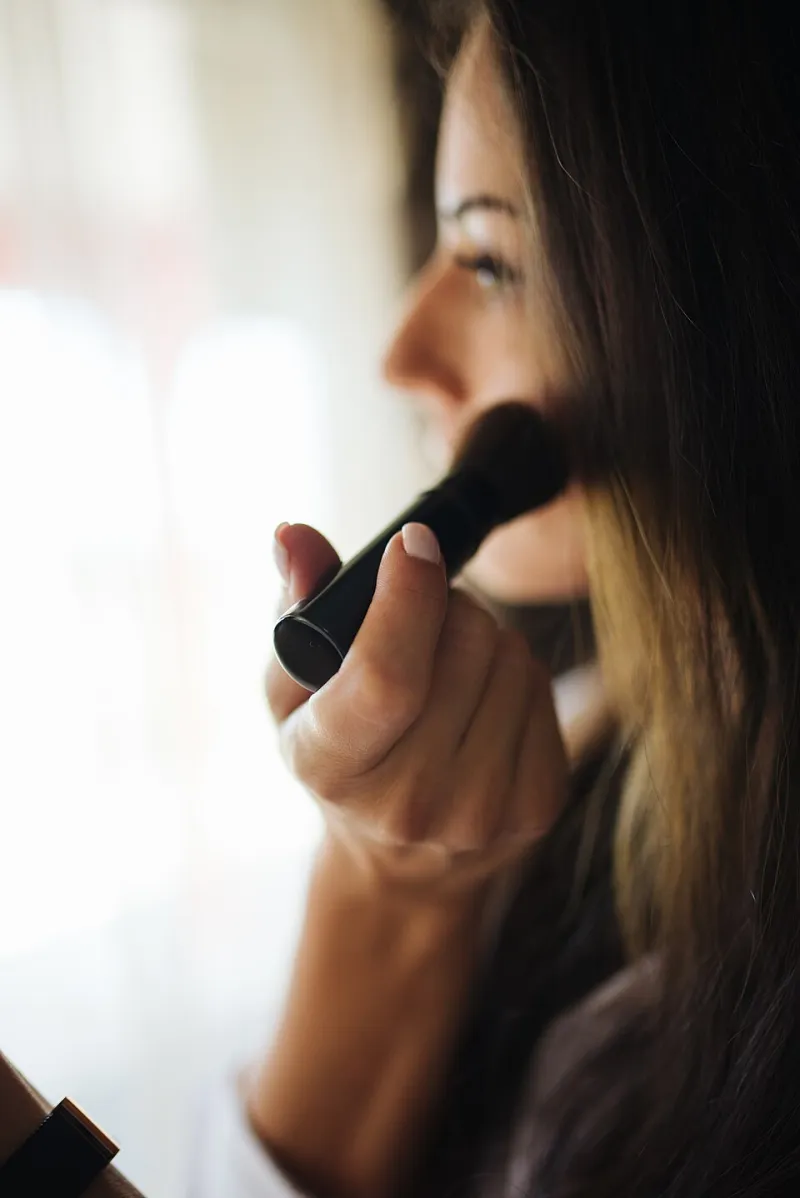
Photo: Shixart1985, CC BY 2.0, via Wikimedia Commons
The Beauty World Has a Commitment Problem
Every six months or so, the beauty conversation does a complete 180. One season, we're all about dewy, barely-there skin, freckles left visible, mascara optional. The next, we're deep in a glazed donut moment or a bold lip renaissance or a graphic liner revival, and suddenly doing the absolute most feels not just acceptable but practically required.
If you've ever stood in front of your bathroom mirror genuinely unsure whether your full-coverage foundation is a power move or a cry for help, you're not alone. The pressure to perform beauty — in exactly the right way, at exactly the right cultural moment — is real, and it's exhausting.
But here's the thing I keep coming back to: the most compelling beauty looks I've ever seen, in real life and on screen, aren't the ones that perfectly tracked a trend. They're the ones that felt like a genuine expression of the person wearing them. And that's a lot harder to manufacture than a good highlight.
The Minimalism Trap
Let's talk about the skinimalism movement for a second, because I have complicated feelings about it. On one hand, the idea of stripping back your routine to a few genuinely effective products, letting your skin breathe, and embracing your natural texture? Genuinely liberating. Especially in the US, where the beauty industry has spent decades convincing us that we need seventeen steps and a dermatologist's co-sign just to leave the house.
On the other hand, 'no-makeup makeup' has quietly become its own kind of pressure — a pressure to look effortlessly perfect, which, if you've ever tried to achieve it, you know is actually extremely effortful. The idea that less is inherently more virtuous or more sophisticated is just another beauty standard dressed up in wellness clothing.
Minimalism is a valid aesthetic choice. It's not a moral one.
And the 'More Is More' Spiral
On the flip side, bold beauty — bright eyeshadow, architectural liner, editorial lip colors, full glam at 11am on a Saturday — has never been more culturally visible. Platforms like TikTok and Instagram have democratized beauty artistry in genuinely exciting ways, and watching someone transform their face with pigment and precision is legitimately mesmerizing content.
But there's a difference between being inspired by bold beauty and feeling obligated to participate in it. When getting ready starts to feel like homework, something has gone sideways. Beauty is supposed to be one of the more enjoyable parts of your day — a few minutes that are entirely, unapologetically about you.
If your current routine doesn't feel that way, it might be time to revisit why you're doing what you're doing.
Building a Personal Beauty Philosophy
So how do you find your actual sweet spot — the place where your beauty routine feels like self-expression rather than performance? It starts with asking some genuinely honest questions.
What do you actually enjoy? Not what looks good on your favorite influencer, not what your best friend swears by, not what just hit Sephora's trending page. What parts of your current routine feel like a treat? What parts feel like a tax? Start keeping a mental (or literal) note. The things that feel like a treat are the foundation of your personal beauty philosophy.
What do you need versus what do you want? This is a useful distinction. Some products earn their place because they genuinely solve a problem — a good SPF, a moisturizer that keeps your skin balanced, a concealer that makes you look like you slept. Others earn their place because they make you happy — the lipstick in a color you don't need but love, the highlighter that makes your cheekbones look like they were carved by someone with excellent taste. Both categories are valid. The problems start when you're spending time and money on products that fall into neither.
Are you dressing for yourself or for an audience? There's nothing wrong with wanting to look polished for a meeting, put-together for a first date, or glam for a night out. Context matters. But when your baseline routine is driven entirely by how others will perceive you — rather than how you feel — it tends to become unsustainable. The most enduring personal style, in beauty as in fashion, is rooted in self-knowledge.
Where to Invest, Where to Experiment
Here's a practical framework that's worked really well for me: think of your beauty routine in two tiers.
The first tier is your foundation — the products you use consistently, that your skin or routine genuinely depends on. This is where it's worth investing in quality. A great moisturizer with SPF, a skin-perfecting primer if you wear makeup, a mascara that doesn't flake, a lip balm you'll actually use. These are the pieces of your beauty wardrobe equivalent to a well-cut blazer or a perfect pair of jeans. Spend thoughtfully here.
The second tier is your playground — the products you try when a trend catches your eye, when you want to switch things up, or when something just looks fun. This is where you don't need to invest heavily. Drugstore finds, mini sizes, limited-edition launches. Experiment freely, commit lightly. If a coral blush moment lasts three weeks before you go back to your usual warm browns, that's not failure — that's just how trend participation works.
This two-tier approach lets you be both intentional and playful, which is honestly the vibe we're going for.
The Joy Metric
Ultimately, I think the best filter for any beauty decision — whether it's a new product, a new technique, or a whole new aesthetic direction — is joy. Not guilt, not obligation, not trend alignment. Does this bring you joy? Does it make you feel more like yourself, or less?
Beauty is one of the rare spaces in adult life where play is not only allowed but encouraged. Whether your version of that looks like a perfectly blended no-makeup makeup moment or a maximalist graphic eye that took forty minutes and a steady hand, it's valid. It's yours. And that's the whole point.
So the next time the beauty internet tells you that you should be doing more, or less, or something completely different than what you're currently doing — take a breath, look in the mirror, and ask yourself how you feel. That answer matters more than any trend cycle ever will.