Dress for How It Feels, Not Just How It Looks: The Case for Choosing Fabric First
There's a moment most of us know well. You're standing in a dressing room under fluorescent lighting, holding a blouse that photographs beautifully — the color is perfect, the cut is flattering, the price is right. You put it on. And something just feels... off. It's stiff in a way that makes you hold your shoulders differently. It scratches at your collarbone. By 2pm, you'd give anything to be out of it.
You buy it anyway, because it looks great.
We've all been there. And most of us have a drawer full of the evidence.
Here's what nobody talks about enough in fashion: the tactile experience of getting dressed — how something actually feels on your body — shapes your entire day in ways that go far deeper than aesthetics. The weight of a fabric, its softness, how it moves with you or against you — these things are quietly influencing your mood, your posture, your energy, and yes, your confidence. And we've been trained to ignore all of it in favor of how something reads on a screen.
It's time to flip that script.
Your Nervous System Has Opinions About Your Outfit
This isn't just a vibe thing. There's actual science behind why certain fabrics make you feel more settled and others leave you subtly on edge all day.
Your skin is your largest sensory organ, and it's constantly sending signals to your brain. When you're wearing something that irritates — a scratchy wool collar, a waistband that digs, a synthetic fabric that traps heat — your nervous system registers that as low-level stress. It's not dramatic. It doesn't feel like a crisis. But it's there, humming in the background, draining a little bit of your cognitive and emotional bandwidth all day long.
On the flip side, fabrics that feel good — soft, breathable, appropriately weighted for the season — can actually have a calming, grounding effect. Think about how you feel wrapped in a cashmere sweater versus a scratchy acrylic one. Or how a linen dress on a hot day feels like freedom, while a polyester blend feels like punishment. That's not just preference. That's your body giving you real information.
Sensory processing researchers have long studied how tactile input affects mood and cognitive function. Clothing that feels comfortable and appropriate to the environment reduces what's sometimes called "body noise" — the background distraction of physical discomfort — so your mind can actually focus on your life.
The Four Fabric Qualities Worth Paying Attention To
When you're shopping or getting dressed in the morning, here are the specific qualities that are worth slowing down to actually notice:
Softness. This one's obvious, but it goes beyond just "does it feel nice." Softness affects how relaxed your muscles stay throughout the day. Fabrics that feel gentle against skin — washed silk, modal, brushed cotton, quality merino — don't trigger the subtle tensing that scratchy or stiff materials can cause. If you tend to carry stress in your shoulders or neck, your fabric choices might be contributing more than you think.
Weight. Heavier fabrics — a substantial wool crepe, a thick denim, a structured ponte knit — can feel grounding and almost armor-like in the best way. They tend to drape and move with intention, which can translate into a more deliberate, confident physical presence. Lighter fabrics feel freeing and effortless, which is perfect when you need to feel unburdened. Neither is better — but knowing what you need on a given day matters.
Drape. How a fabric falls and moves with your body affects how you carry yourself. A fabric with beautiful drape — think fluid silk charmeuse or a good quality jersey — moves with you, which encourages more natural, relaxed movement. Stiff fabrics can make you feel like you're performing in a costume rather than just living in your clothes.
Breathability. This one is deeply underrated. When you're physically uncomfortable because you're too warm or your skin can't breathe, it shows — in your face, your energy, your willingness to engage. Natural fibers like cotton, linen, silk, and wool (yes, wool — it's a temperature regulator, not just a winter fabric) tend to work with your body's natural rhythms. Synthetics can be great for specific purposes, but as your everyday baseline, they often work against you.
Why We've Been Trained to Ignore All of This
Social media and fast fashion have done something insidious to how we evaluate clothes. When you're scrolling through outfit posts, you're making visual judgments — color, shape, styling. The tactile experience is entirely absent. And because so much of our fashion inspiration now lives on a 4-inch screen, we've unconsciously started evaluating our own wardrobes the same way.
We hold up a blouse and think: does this look good? Does it photograph well? Does it match the aesthetic I'm going for?
We almost never ask: does this feel like something I actually want to live in for eight hours?
Fast fashion has compounded this by training us to prioritize price and visual trend over material quality. A $12 dress that looks cute on a hanger is a very different experience from a $12 dress you're wearing to a full day of meetings. The gap between how something looks and how it feels has never been wider — and we're the ones paying for it, in discomfort and in the mental load of getting dressed in clothes that don't actually serve us.
How to Start Choosing Fabric Intentionally
You don't need to overhaul your wardrobe or only buy expensive natural fibers from now on. Start smaller.
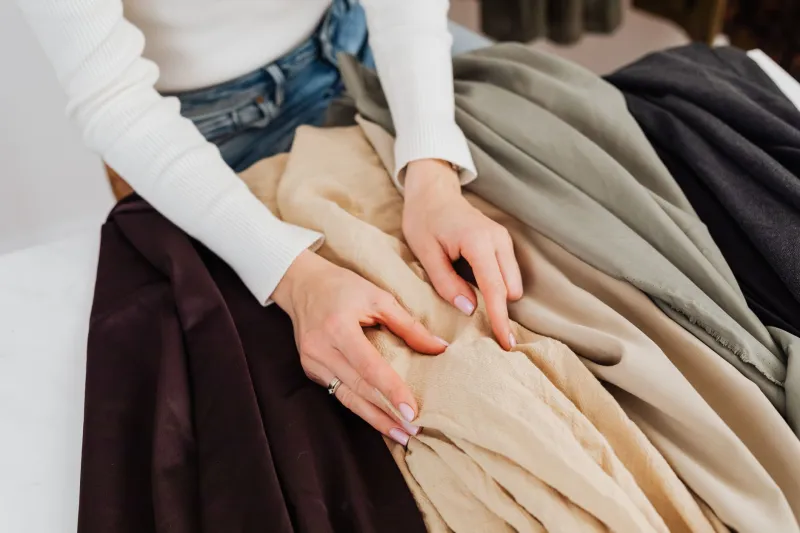
Before you buy anything, hold it. Actually touch it. Rub it between your fingers. Press it against your inner arm, which is more sensitive than your hands. Ask yourself honestly: does this feel like something I'd want against my skin for an entire day?
When you're getting dressed in the morning, check in with how you're feeling. Anxious? Reach for something soft and substantial — a cashmere-blend sweater, a heavyweight cotton tee. Energized and social? Maybe that's the day for the silk blouse that makes you feel like you're gliding. Overwhelmed? Linen or a worn-in cotton might feel like exhaling.
Pay attention to the pieces you reach for on hard days. There's a reason certain things live in heavy rotation even when they're not the most exciting items in your closet. They feel right. That's information.
And when something consistently feels uncomfortable — the fabric that pills and scratches, the blouse you're constantly tugging, the dress that somehow always makes you feel vaguely irritable by afternoon — let it go. No matter how good it looks in photos.
The Clothes That Feel Like You
Ultimately, building a wardrobe that works for your life means building one that works for your body — not just your aesthetic vision board. The most stylish women I've ever encountered aren't always wearing the trendiest pieces. They're wearing things that fit well and feel good, and that ease shows up in how they move and how they hold themselves.
That's not a look you can manufacture. It comes from actually listening to what your body is telling you when you get dressed.
So the next time you're standing in that dressing room under the fluorescent lights, holding something that looks perfect but feels wrong — trust the feeling. Your skin knows what your Instagram feed doesn't.