Why the Empty Hanger Might Be the Most Powerful Thing in Your Closet
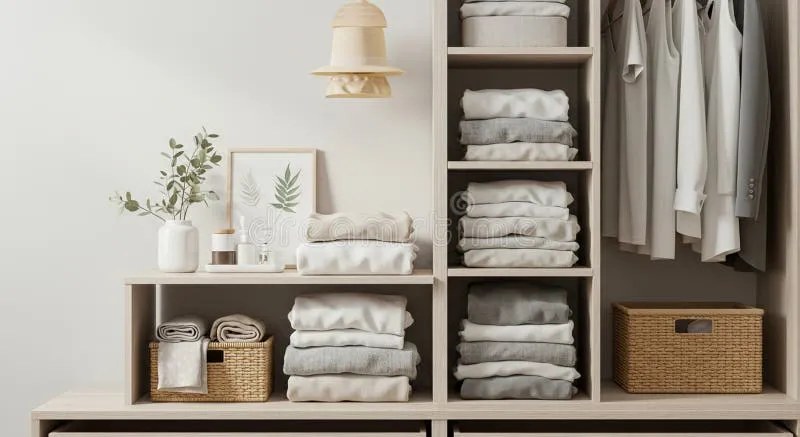
Photo: minimalist organized closet with space between clothing hangers neutral tones, via thumbs.dreamstime.com
There's a particular kind of anxiety that lives in a stuffed closet. You know the one — doors that barely close, hangers packed so tight nothing can breathe, and yet somehow, somehow, you're standing there at 8 a.m. convinced you have nothing to wear. It's one of the great paradoxes of modern dressing, and honestly? It makes complete sense once you understand what's actually happening.
We've been sold the idea that a full closet equals a confident wardrobe. More options, more possibilities, more you. But what if the opposite is closer to the truth? What if the empty hanger, the deliberate gap, the space you haven't filled yet is the thing that's actually setting you free?
The Overcrowded Closet Is a Confidence Trap
Here's the thing about decision fatigue that nobody talks about in the context of getting dressed: it doesn't just make mornings harder. It quietly chips away at how you feel about your own style. When everything is crammed together, nothing stands out. Your favorite blazer is buried. That silk blouse you love gets lost in the shuffle. You end up defaulting to the same three outfits on rotation — not because they're your best, but because they're the ones you can find.
The result isn't abundance. It's noise. And noise is the enemy of confidence.
Psychologists have a name for this phenomenon — the paradox of choice — and it shows up everywhere from restaurant menus to Netflix queues. The more options we have, the less satisfied we feel with whatever we pick. Your wardrobe is not immune to this. In fact, it might be one of the places you feel it most acutely, because getting dressed is already a vulnerable act. You're deciding how you want to show up in the world before the world has even had a chance to weigh in.
What Strategic Gaps Actually Do
Think about the closets you've admired — in real life, in magazines, on those satisfying Instagram reels where everything has breathing room and you can actually see each piece. There's a reason those closets feel aspirational. It's not just aesthetics. It's the visual signal that every item was chosen.
When you leave intentional gaps in your wardrobe, a few things start to happen:
You get clearer on what you actually need. An empty hanger isn't a failure — it's a placeholder. It's your closet asking a question: What would genuinely earn a spot here? That question is incredibly useful. It keeps you from impulse-buying another striped tee just because it was on sale, and it keeps you focused on the pieces that would actually move the needle on how you get dressed every day.
Your existing pieces get to shine. Negative space in design exists for a reason — it draws the eye to what matters. The same principle applies to your closet. When your favorite coat isn't smashed between six other coats, it becomes the coat. You see it, you reach for it, you wear it with intention.
Getting dressed becomes a decision, not a search. There's a real difference between choosing an outfit and excavating one. Strategic gaps mean less excavating and more actual choosing, which means you walk out the door feeling like you made a decision rather than survived one.
The Conceptual Gap Is Just as Important
Physical space matters, but so does the mental version of it. A conceptual gap in your wardrobe is the idea you haven't committed to yet — the style direction you're curious about but haven't fully explored, the category you've been avoiding because you're not sure it's "you."
Most of us fill those gaps prematurely. We see a trend, we're not sure if we love it, and we buy something anyway — a hedge, a just-in-case. Then it sits. Unworn. Taking up both physical and mental real estate.
Leaving that conceptual space open is actually an act of self-respect. It's saying: I'm not going to buy my way into a style identity. I'm going to let it develop. That's not indecision. That's discernment, and discernment is deeply attractive.
How to Start Making Room (Without Spiraling)
If the idea of creating gaps in your closet sounds like it's going to turn into a full weekend purge-and-regret situation, I hear you. This doesn't have to be dramatic. Here are a few low-stakes ways to start:
Do the one-season audit. Go through just one season's worth of clothes — say, everything you'd reach for right now. Anything you didn't touch last season gets questioned. Not automatically removed, just questioned. Ask yourself honestly: did I skip this because I didn't love it, or because I forgot it was there?
Stop filling gaps just to fill them. Next time you're shopping and you pick something up out of habit or vague guilt about a hole in your wardrobe, pause. Is this actually solving a real problem, or are you just uncomfortable with the space? The discomfort is worth sitting with.
Give your closet a layout that honors your best pieces. Move the things you love most to the most visible spots. Let them have room around them. This sounds small, but it changes how you interact with your wardrobe every single morning.
Keep a running list instead of buying on impulse. When you notice a genuine gap — like, you actually need a versatile white button-down and you don't have one — write it down instead of buying the first thing you see. Letting it sit on a list for a few weeks is a surprisingly effective filter. Some things drop off because they weren't real needs. Others stay, and when you finally buy them, they earn their place.
The Closet That Feels Like You
Here's the quiet truth underneath all of this: a closet full of things you're not sure about doesn't just waste space. It creates low-grade static every single day. It makes you second-guess yourself. It makes getting dressed feel like a problem to solve rather than a moment to inhabit.
The confidence closet isn't the one with the most pieces. It's the one where you know exactly what you have, you love most of what's in it, and the gaps that remain are intentional — spaces held open for something worth waiting for.
That's not scarcity. That's clarity. And clarity, when it comes to how you show up in the world, is everything.