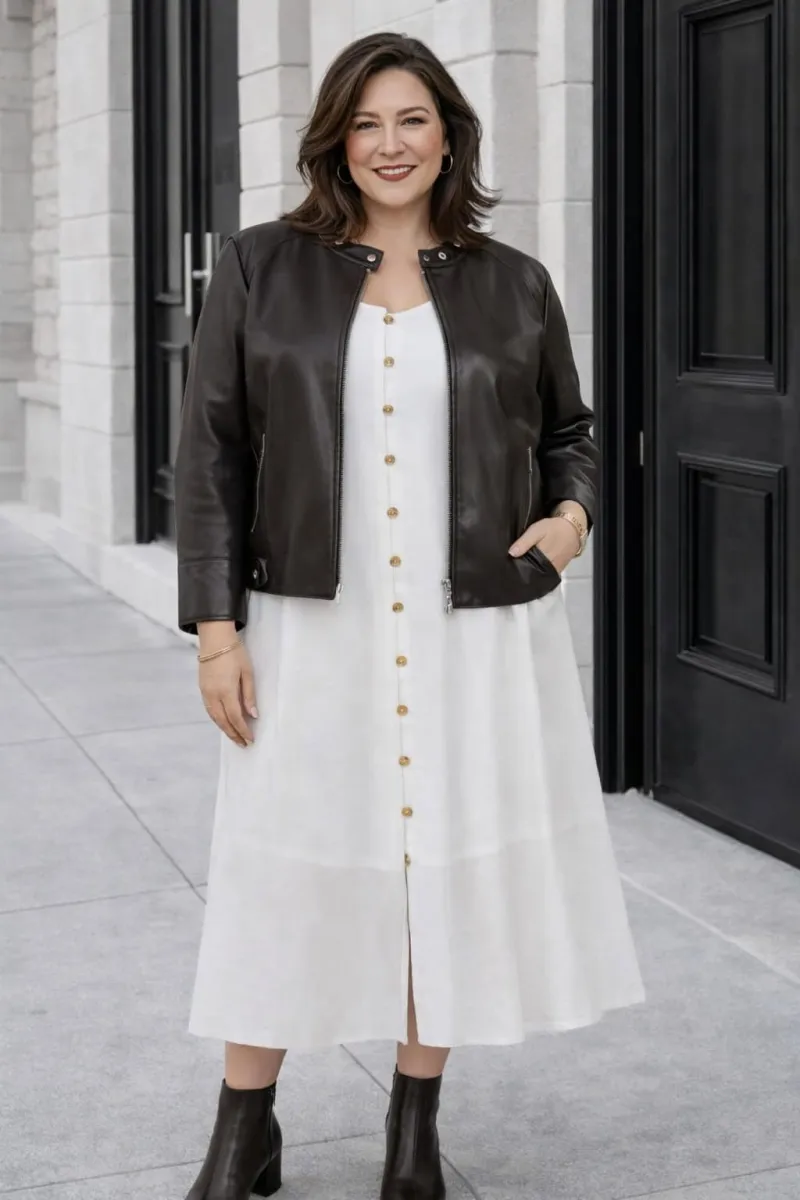
The Invisible Outfit: How Your Signature Scent Completes Everything You Wear
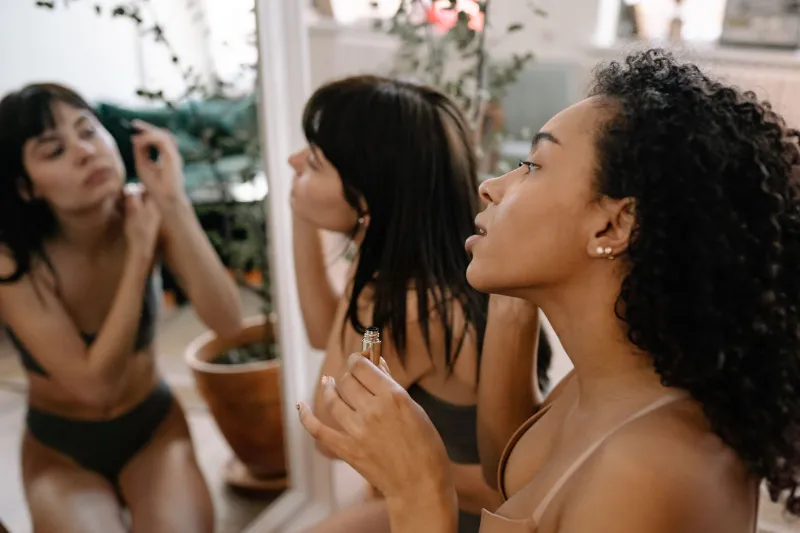
There's a woman I think about sometimes. I ran into her at a coffee shop years ago — great coat, effortless hair, the kind of put-together energy that made you want to ask where she bought everything. But what I actually remember most? The way she smelled when she walked past. Warm, a little woody, something with vanilla underneath but not sweet — nothing obvious about it. It matched her completely. It was the last piece of an outfit I never fully saw.
That's the thing about fragrance that nobody really talks about in fashion conversations. We spend hours dissecting hemlines and color palettes and whether our shoes are reading as intentional or accidental — and then we spritz on something we've had since college or grab whatever was on sale at the drugstore and call it done. Which is wild, honestly, because scent is one of the most psychologically powerful signals you send into a room.
It's time we started treating it like the style tool it actually is.
Why Fragrance Is Fashion (Just Invisible)
Personal style is really just a form of communication. Every choice you make — the oversized blazer, the delicate gold chain, the way you cuff your jeans — is sending a message about who you are and how you want to move through the world. Fragrance does the exact same thing, except it works on people before they even look at you.
Scent is processed by the olfactory bulb, which sits right next to the parts of your brain that handle emotion and memory. This is why a certain perfume can teleport you back to your grandmother's house or make you feel like a different version of yourself entirely. It's not magic — it's just biology. And once you understand that, the idea of choosing a fragrance casually starts to feel a little like choosing your outfit with your eyes closed.
The most stylish women I know — the ones who have genuinely figured out their aesthetic — almost always have a signature scent. Not a rotation of twelve. One. Maybe two. Something that when you smell it, you think of them. That consistency is part of their brand, even if they'd never use that word for it.
The Psychology of Smelling Like Yourself
Here's something interesting: studies on scent and confidence consistently show that people who wear fragrance they love report feeling more self-assured and attractive. Not because the perfume is doing something magical to other people — but because of how it makes you feel. You know you smell good. That knowledge lives somewhere in your body and it changes how you carry yourself.
This is the same reason getting dressed in something you love shifts your whole day. It's not vanity. It's the very real psychological feedback loop between how we present ourselves and how we feel on the inside. Your signature scent is just another layer of that.
Think about it this way: when you're wearing an outfit that's completely you — the right fit, the right vibe, the right energy — you walk differently. You take up space differently. Scent adds another dimension to that. It's the thing that lingers after you leave a room. It's what makes people say "you always smell amazing" without being able to tell you exactly why.
How to Actually Find Your Signature
This is where most people get stuck. Walking into Sephora and sniffing forty testers back to back is a one-way ticket to a headache and a very confused nose. There's a better way.
Start with what you already love. Not fragrances — anything. Do you love the smell of rain on hot pavement? Fresh laundry? An old bookstore? Cedar in a sauna? The beach right before a storm? These aren't just random preferences. They're clues about what fragrance families will feel like you. Earthy, petrichor lovers tend to gravitate toward chypres and green scents. Fresh laundry people often love clean musks and light florals. Bookstore people? Usually ambers, woods, or something with a little smoke.
Learn the basic fragrance families. You don't need a degree in perfumery. Just know the broad categories: florals, orientals (warm, spicy, resinous), fresh (citrus, aquatic, green), and woods/musks. Most perfumes blend several families, but knowing which ones you respond to narrows the search dramatically.
Try before you commit. Most department stores and fragrance boutiques will give you samples — ask for them. Wear a scent for a full day before deciding anything. Fragrance smells completely different on your skin than it does on paper or in the bottle. The top notes hit you first, but the dry-down — the way it smells three hours in — is what you're actually going to be living with.
Give yourself permission to go niche. Mainstream designer fragrances are fine, but niche perfume houses like Le Labo, Maison Margiela's Replica line, Byredo, or Dedcool often offer something more unusual and less recognizable — which means less chance of walking into a meeting and smelling like three other women in the room. Uniqueness matters in fragrance the same way it matters in style.
Wearing It Like You Mean It
Once you find your scent, wear it with intention. Apply it to pulse points — wrists, the base of your throat, behind your ears, the inside of your elbows. These spots generate heat, which helps the fragrance bloom and project. Don't rub your wrists together; it actually breaks down the top notes faster.
Layer if you want depth. Many fragrance brands now offer their scents in body lotion or shower gel form. Layering the same scent across products creates a richer, longer-lasting effect without being overwhelming.
And consider occasion without overthinking it. Your signature is your signature — you don't need a different perfume for every context. But you might naturally reach for something lighter on a Sunday morning versus something deeper and more enveloping on a date night. That's not inconsistency; that's range within a cohesive identity.
The Last Layer
Getting dressed is an act of self-expression, and most of us have spent real time and energy figuring out what we want to say with our clothes. Fragrance deserves that same consideration — because it's the part of your look that stays in the room after you've left, the thing people associate with you long after they've forgotten what you were wearing.
Your signature scent isn't an accessory. It's an extension of you. And when it's right — when it actually fits — you'll know it the same way you know when an outfit is exactly correct. Not because someone told you. Because you feel it.
That's the whole point, really. Style, at its best, is just the art of feeling like yourself on purpose.