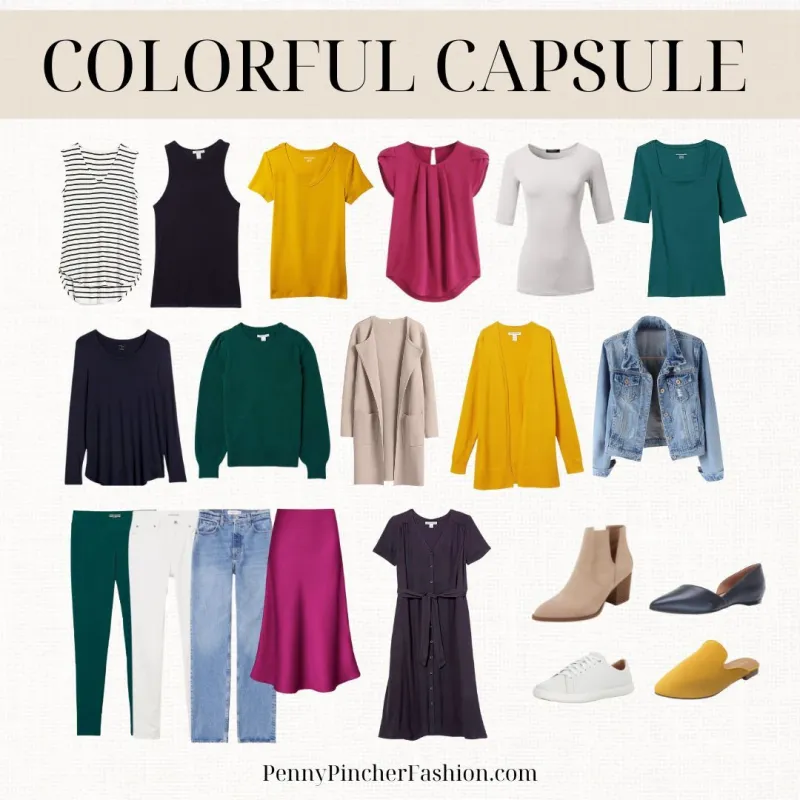
Dressed in Your Own Truth: How to Build a Closet That Actually Feels Like You
Photo: woman confidently choosing outfit from organized colorful wardrobe, via thumbs.dreamstime.com
There's a specific kind of dread that hits when you're standing in front of a full closet and feeling like you have absolutely nothing to wear. Not because the clothes aren't there — they are, dozens of them — but because none of them feel like you right now. Maybe they never did.
For a lot of us, the clothes we own are a collection of impulse buys, gifts we kept out of guilt, and aspirational purchases for a version of ourselves we were trying to become. The result is a wardrobe that looks busy and feels hollow. Getting dressed becomes a chore instead of a ritual.
Here's the thing: what you put on your body in the morning isn't trivial. Research in the field of "enclothed cognition" — a term coined by psychologists Hajo Adam and Adam Galinsky — suggests that the symbolic meaning we attach to clothing actually influences how we think and perform. In other words, wearing something that aligns with how you see yourself isn't vanity. It's a form of self-care.
What "Confidence Dressing" Actually Means
Let's get one thing straight: confidence dressing isn't about wearing power blazers and red lipstick unless those things genuinely resonate with you. For some women, confidence looks like a perfectly worn-in pair of jeans and a soft linen tee. For others, it's a maximalist floral dress that turns heads at brunch. Neither is more valid than the other.
The real definition of confidence dressing is simpler and harder at the same time: it's wearing clothes that don't make you think about them. When a piece fits well, reflects your actual taste, and suits the life you're living today — not the life you're planning someday — you stop tugging at it, second-guessing it, or explaining it. You just are in it.
Jessica, a 34-year-old graphic designer from Austin, described it perfectly: "I used to buy a lot of structured, 'professional' pieces because I thought that's what I was supposed to want. But every time I wore them, I felt like I was costuming myself for a role. The day I finally leaned into color and loose silhouettes — which is genuinely how I like to dress — everything changed. I stopped dreading Monday mornings."
The Body Neutrality Factor
One of the biggest obstacles to building a wardrobe that feels authentic? The deeply ingrained habit of buying clothes for a body you don't currently have.
Body neutrality — the idea that your body doesn't have to be loved or hated, just accepted as the vessel you live in — has started reshaping conversations in the wellness and fashion spaces alike. And it has practical implications for your closet.
Stylist and body-image advocate Maya Thurston (who works with clients in New York and remotely across the U.S.) puts it bluntly: "The 'I'll wear this when I lose ten pounds' clothes are the most expensive clothes in your closet. Not because of the price tag, but because of the emotional cost every time you see them."
Her advice? Dress the body you have today. Not as a resignation, but as a radical act of self-respect. When your clothes fit the body that actually woke up this morning, you move differently. You take up space differently.
A Practical Audit: The Three-Pile Method
If you're ready to start curating a closet that genuinely serves you, a wardrobe audit is the most direct route. Here's a simple framework that goes a little deeper than the usual "does it spark joy" question.
Pile One: The Yes Pile These are the pieces you reach for instinctively — the ones that make you feel like yourself within seconds of putting them on. Notice what they have in common. Is it a certain silhouette? A color family? A specific fabric? These patterns are your personal style data.
Pile Two: The Why Pile These are the pieces you own but rarely wear. Before discarding them, ask why they're not working. Is the fit off? Does the color wash you out? Does it belong to a lifestyle you've outgrown? Understanding the why helps you avoid buying the same mistake twice.
Pile Three: The Honest Pile This is for the aspirational pieces — the ones you keep "just in case" or because they were expensive. Be honest with yourself. If it doesn't work for your actual life, it's taking up physical and mental real estate you could use better.
Color Is a Language — Learn to Speak It
Color psychology is real, and it's personal. While there are broad cultural associations (blue reads as calm, red as bold), what matters most is the emotional response you have to specific colors — and how they interact with your skin tone, your hair, your eyes.
One exercise worth trying: pull out every piece in your closet that makes you feel genuinely good. Lay them out together. Chances are, a color story will emerge. Maybe it's earthy neutrals with pops of terracotta. Maybe it's a range of soft blues and greens. That palette is your closet's north star.
From there, you can start making more intentional decisions. If a new piece doesn't speak to that palette — or at least complement it — it's worth pausing before buying.
Fit Is Non-Negotiable
No amount of beautiful fabric, perfect color, or on-trend silhouette will make a piece feel like yours if the fit is wrong. And "wrong" doesn't mean "not a perfect size 6" — it means the garment isn't working with your specific proportions.
A tailor is one of the most underrated resources in fashion. Hemming pants, taking in a waistband, adjusting sleeve length — these small alterations can transform a piece from "fine" to phenomenal. If you've never taken something to a tailor, start with one piece you love the idea of but never quite wear. The transformation might surprise you.
Your Closet as a Self-Portrait
Ultimately, building a wardrobe that feels like you is an ongoing practice, not a one-time project. Your style will evolve — it should. Life changes, priorities shift, and the way you want to show up in the world changes with them.
The goal isn't a perfect capsule or a Pinterest-worthy closet. It's a collection of pieces that make getting dressed feel like a small, daily affirmation of who you are. When you open those doors in the morning and see clothes that genuinely belong to your life, the whole day starts differently.
And honestly? That's worth more than any trend.