Forget the 33-Piece Rule: Why the Capsule Wardrobe Trend Isn't for Everyone

Photo: Wilfredor, CC BY-SA 4.0, via Wikimedia Commons
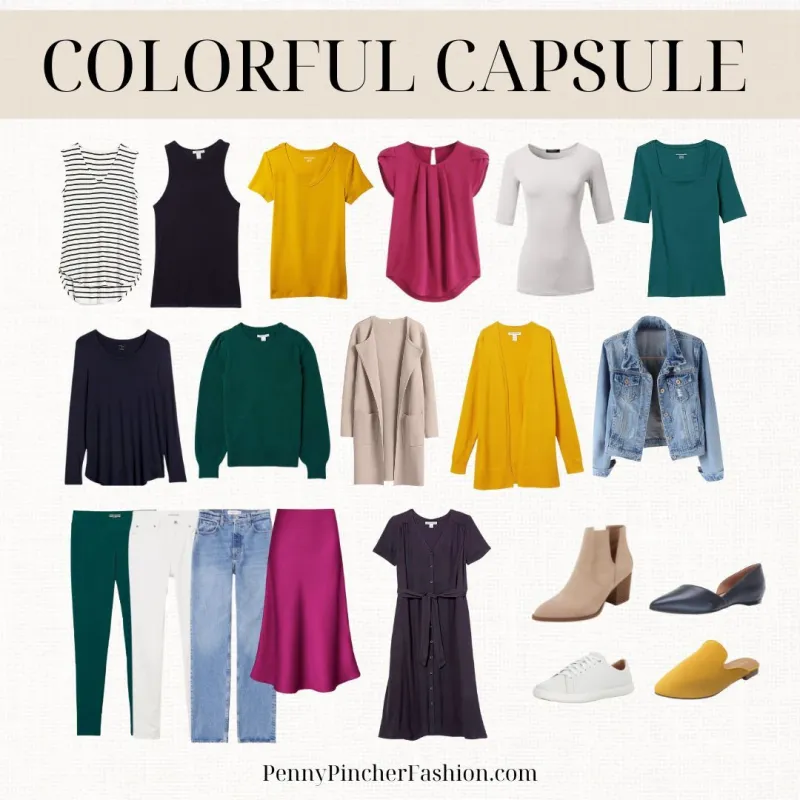
Somewhere between the fifth Pinterest board of neatly folded cashmere and the third YouTube video about "living with less," a lot of us started to feel like we were doing fashion wrong. The capsule wardrobe — typically defined as a curated collection of 30 to 40 timeless, interchangeable pieces — has been positioned as the holy grail of getting dressed. Organized, intentional, effortless.
Except for the women it doesn't work for at all.
And honestly? That's most of us.
The Fantasy vs. The Reality
The capsule wardrobe ideal was popularized in the 1970s by London boutique owner Susie Faux and later glamorized by Donna Karan's "Seven Easy Pieces" collection. The concept is genuinely appealing: fewer decisions, less clutter, more cohesion. On paper, it sounds like freedom.
But the model was designed around a very specific lifestyle — one that involves a relatively consistent schedule, a neutral color palette preference, a standard body type that fits into "classic" silhouettes, and, let's be honest, a certain amount of disposable income to invest in quality basics that actually hold up.
For women juggling multiple roles — the teacher who also coaches weekend soccer, the creative director who attends gallery openings and school pickup, the woman whose weight fluctuates and who refuses to dress in denial of her actual body right now — a rigid 33-piece system isn't liberating. It's just a different kind of cage.
Personality Types That Clash With Minimalism
Not everyone processes joy the same way, and that absolutely includes the joy of getting dressed.
If you're someone who finds genuine pleasure in color, pattern, and variety — if the act of putting together an unexpected outfit is actually a creative outlet for you — minimalism can feel like being asked to paint with only two colors. You're not doing it wrong. Your relationship with clothing is just richer and more expressive, and that deserves a framework that honors it.
There's also the practical personality factor. Some people are natural planners who love a tightly edited wardrobe because it removes variables. Others are spontaneous dressers who need options because their mood, energy level, or social context can shift dramatically from morning to night. Neither approach is more evolved than the other.
The capsule wardrobe works beautifully for the planner. For the spontaneous dresser, it's a recipe for standing in front of a closet full of "practical" pieces feeling completely uninspired.
The Body Diversity Problem
Here's something the capsule wardrobe content rarely addresses directly: the classic "timeless basics" list is almost always written for a straight-size body.
For plus-size women, petites, tall women, or anyone with a body that doesn't fit neatly into standard sizing, building a capsule wardrobe is exponentially harder — not because of personal style failure, but because the market hasn't caught up. When you finally find a pair of wide-leg trousers that fits your hips and your inseam, you buy three pairs. When a blazer actually accommodates your shoulders, you don't let it go just to hit some arbitrary number.
And that's completely valid. A functional wardrobe is one that fits the body you're living in, not the body the trend assumes you have.
What Actually Works: Alternative Frameworks
So if the capsule model doesn't fit your life, what does? A few approaches worth trying:
The Wardrobe Ecosystem
Instead of aiming for a single curated collection, think of your closet as an ecosystem with distinct zones. You might have a "work core" of five to seven reliable pieces, a "weekend rotation" that leans more relaxed and playful, and a "special occasion" section that doesn't need to justify its existence by being worn weekly. Each zone has its own logic, and together they serve your actual life.
The "Cost Per Wear" Audit
Rather than counting pieces, track value. A maximalist closet full of things you actually wear is infinitely more functional than a minimalist one full of things you should wear. Go through your closet and ask: does this earn its space? Not by aesthetic rules, but by real use and real joy.
The Anchor Piece Method
For women who love variety but struggle with outfit cohesion, try anchoring your wardrobe around a few statement pieces you genuinely love — a print, a silhouette, a color — and building outward from there. Your wardrobe doesn't need to be neutral to be cohesive. It just needs an internal logic that makes sense to you.
Dressing for Your Actual Schedule
Take a week and note what you actually do each day. Not what you wish you did — what you actually do. Then look at your closet and ask whether it reflects that reality. A woman who works from home three days a week and attends events on weekends needs a completely different wardrobe balance than the capsule template suggests.
Permission to Opt Out
The capsule wardrobe trend, like most wellness-adjacent lifestyle trends, has a subtle undercurrent of moral framing — as if owning fewer things makes you a more enlightened, more disciplined, more admirable person. And that framing has done a lot of women a quiet disservice.
Your closet is a tool. Its only job is to help you show up in the world feeling like yourself — confident, comfortable, and ready for whatever the day actually holds. If 33 pieces does that for you, wonderful. If 133 pieces does it, that's equally valid.
The most stylish thing you can do isn't follow a formula. It's build a relationship with your wardrobe that's honest about who you are, what your life looks like, and what genuinely makes you feel good. That's the version of "intentional dressing" worth chasing.