What Your Wardrobe Is Already Saying About You (And Whether You're Listening)
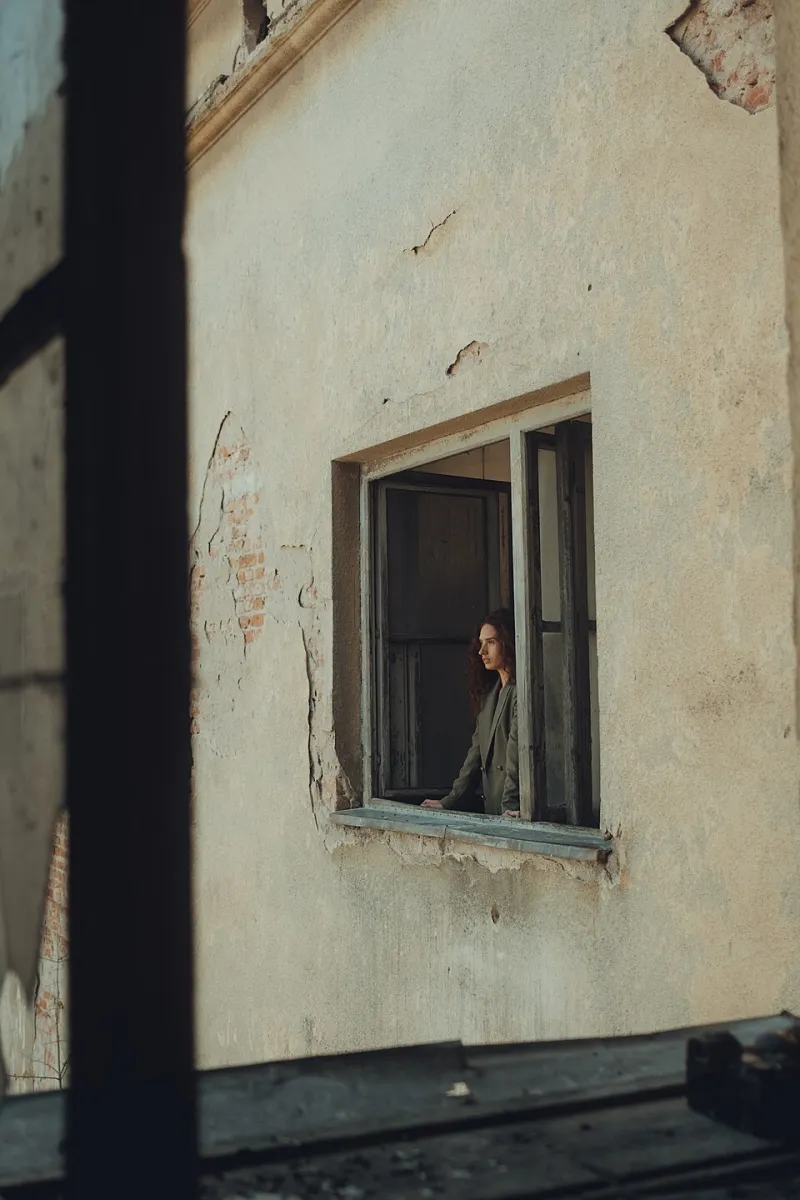
Photo: Shixart1985, CC BY 2.0, via Wikimedia Commons
There's a conversation happening in your closet every single day. It doesn't require words. It doesn't wait for you to be ready. It just unfolds, quietly and persistently, in the form of what you reach for, what you avoid, what still has the tags on, and what you've worn so many times the fabric has memorized the shape of your body.
We talk a lot about personal style as if it's purely aesthetic — a fun puzzle of color and proportion and trend cycles. But style is also language. And like any language, it carries meaning we don't always consciously choose to send.
The Outfit You Wear When You Need to Feel Like Yourself
Most of us have one. Maybe it's a blazer that straightens your spine the moment you put it on. Maybe it's a particular shade of red that makes you feel like you could walk into any room. Maybe it's a soft, worn-in denim jacket that feels like a hug from your own history.
Psychologists call this phenomenon enclothed cognition — the idea that what we wear influences our mental state and cognitive performance. Studies have shown that people who wear clothing they associate with competence, creativity, or confidence actually perform better in tasks tied to those qualities. Your blazer isn't just a blazer. It's a cue. A signal to your brain about who you are and what you're capable of right now.
But here's what those studies don't fully capture: the reverse is also true. The clothes you put on when you feel defeated, when you're hiding, when you're shrinking — those are sending signals too. And they're worth paying attention to.
When a Wardrobe Holds a Life Chapter Hostage
I've talked to women who kept entire sections of their closet dedicated to versions of themselves they were no longer living. The corporate wardrobe from a career they'd left. The going-out clothes from a decade ago that no longer fit their body or their life. The "someday" pieces bought for a future self who never quite materialized.
There's nothing wrong with any of that, by the way. Clothes carry memory. They're allowed to. But when a closet becomes a museum of who you used to be rather than a toolkit for who you are right now, the story it tells gets complicated.
One woman I know — let's call her Maya — went through a major professional pivot in her late thirties, leaving a high-powered finance job to launch a ceramics studio. For the first year, she kept showing up to her new life in her old uniform: tailored trousers, silk blouses, shoes that clicked on the floor. She said she felt like a fraud in her own studio. It wasn't until a friend pointed out that she was dressed for a meeting she no longer had to attend that something clicked.
She didn't overhaul her wardrobe overnight. But she started making small, intentional swaps. Linen instead of silk. Flat, worn-in leather instead of heels. Colors that felt like earth and clay rather than boardroom neutrality. Within a few months, she said she finally felt like she'd actually left her old job. The clothes weren't the whole story — but they were part of it.
The Transition Outfit: How Women Use Getting Dressed to Mark What's Changing
Major life transitions often play out in the closet first. Divorce. A new city. A health journey. The months after losing someone. Women talk about these moments in wardrobe terms more than we acknowledge — the deliberate decision to wear something bright to a funeral because the person who died would have wanted that. The first time after a breakup you wear the dress he never liked. The outfit you choose for your first day at a new company, held together with equal parts hope and nerves.
These aren't trivial choices. They're rituals. They're the way we mark time and signal — to ourselves as much as anyone else — that something has shifted.
A therapist once told me that one of the most common things she hears from clients navigating big life changes is some version of I don't know what to wear anymore. Not as a fashion complaint. As a genuine expression of identity disorientation. When who you are is in flux, your clothes — those daily, physical, tactile choices — can feel suddenly weightless, unmoored from meaning.
And that, honestly, can be the beginning of something really interesting.
Reading the Narrative Your Closet Is Already Telling
If you want to understand the story your wardrobe is currently telling, try this: stand in front of your closet and notice your gut reaction. Not to individual pieces, but to the overall feeling. Is it chaotic? Controlled? Hopeful? Exhausted? Does it feel like you, or like someone you used to be, or someone you thought you should become?
Then look at what you actually wear versus what you own. The gap between those two things is often where the most interesting storytelling lives. The unworn pieces aren't failures — they're clues. Maybe they represent an aspiration that's genuinely yours and just hasn't found its moment yet. Or maybe they're someone else's idea of who you should be, and you've been carrying that weight around on a hanger.
Pay attention to color patterns too. Women who are going through periods of emotional withdrawal often gravitate toward neutral, muted palettes without consciously realizing it. Women stepping into new confidence frequently start adding color or print in small, almost experimental ways. Neither is better or worse — but both are worth noticing.
Dressing With Intention Doesn't Mean Dressing for Performance
Here's what I want to be clear about: none of this is an argument for performing a version of yourself that doesn't feel true. Dressing intentionally isn't about curating an image for other people's consumption. It's about being in conversation with yourself — honestly, curiously, without judgment.
Your wardrobe doesn't have to be aspirational. It doesn't have to be on-trend or cohesive or Instagram-worthy. But it should, ideally, feel like yours. Like it's working with you rather than against you. Like it's telling a story you actually want to be part of.
Because here's the thing about non-verbal communication: you're always doing it. You don't get to opt out. The only question is whether you're doing it on purpose.
So the next time you open your closet and feel that low-grade frustration — that sense of having nothing to wear despite a full rack — pause for a second. Ask yourself what story you're actually trying to tell today. Not for anyone else's benefit. Just yours.
Your clothes have been listening. It might be time to start listening back.