Feel It First: Why Texture Might Be the Missing Piece in Your Personal Style
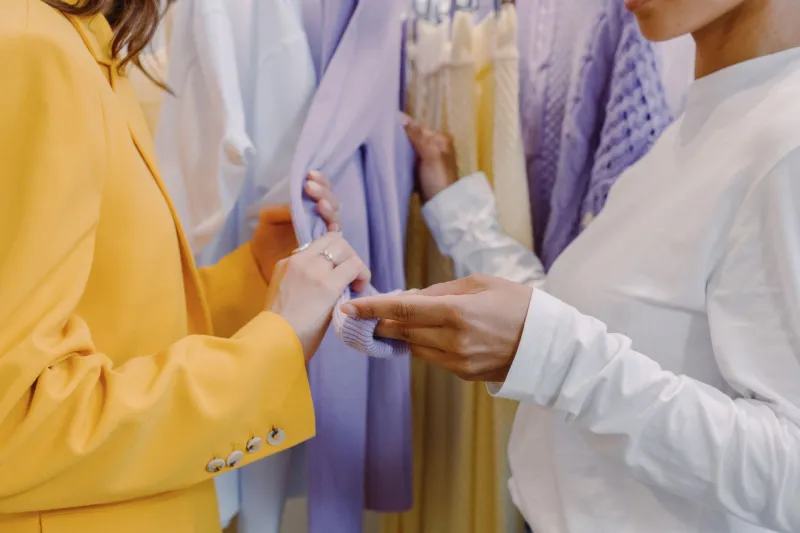
There's a moment that happens in almost every great shopping trip — not when you spot something across the rack, but when you reach out and touch it. That split-second when your fingers brush against something soft, or crisp, or unexpectedly weighty, and your whole body goes yes. That's not a coincidence. That's your nervous system doing its job.
We talk about style almost entirely in visual terms. Color palettes. Silhouettes. Proportions. Trends. And sure, all of that matters. But there's a whole other dimension to what we wear that barely gets airtime, and it might actually be the thing that determines whether an outfit makes you feel powerful or just... present. Texture — the physical, tactile quality of fabric — affects your mood, your posture, your confidence, and yes, how you move through the world on any given day.
So why are we still buying clothes like we're shopping from a catalog?
The Skin Has an Opinion (And It's Loud)
Your skin is your largest organ. It's constantly sending signals to your brain about what it's in contact with, and those signals don't stop just because you got dressed and walked out the door. When you're wearing something that feels scratchy, stiff, or just slightly off, your body registers a low-level irritation all day long. You might not consciously notice it. But it's there — a quiet, persistent friction that makes you a little more distracted, a little more uncomfortable, a little less yourself.
Flip that around: when you're wearing something that genuinely feels good against your skin — the drape of a silk blouse, the soft weight of a cashmere sweater, the clean coolness of linen in July — there's a subtle ease that settles in. You're not fighting your clothes. You're moving with them.
Sensory psychologists have long noted that tactile comfort has a direct link to emotional regulation. In plain English: fabrics that feel good can genuinely calm you down, ground you, and help you feel more in control. That's not woo — that's just how human beings are wired.
Why Touching Fabric In-Store Matters More Than Any Aesthetic Board
Here's a thing that happens constantly in the age of Instagram shopping: you see something online, it looks incredible in the photo, you buy it, it arrives, and something is just... wrong. Not wrong in a way you can easily articulate. It fits. The color is right. But you never reach for it.
Nine times out of ten, the issue is texture.
Photography flattens fabric. It can't tell you that a sweater is itchy at the collar, or that a pair of trousers is stiffer than they look, or that a dress has a strange synthetic sheen that reads differently under actual light. It definitely can't tell you how something feels when you move in it, sit in it, or wear it for eight hours straight.
This is a genuine argument for still shopping in physical stores sometimes — or at the very least, ordering with the intention of touching before you commit. When you're standing in front of a rack and you reach out to feel something, you're gathering information that no product description can give you. Don't skip that step. It's arguably the most important one.
A Texture Audit: What's Actually in Your Closet?
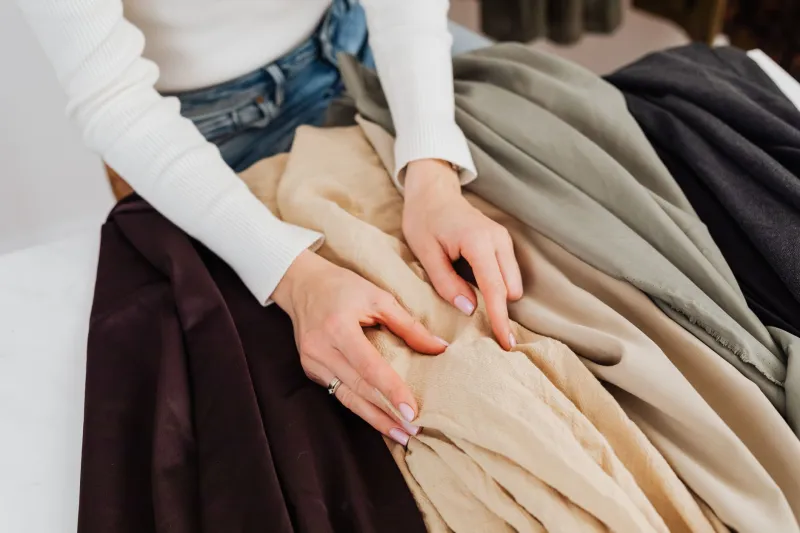
Here's a low-key exercise worth doing on a slow Sunday: pull out the clothes you actually wear — the ones you reach for again and again without really thinking — and notice what they have in common texturally. Chances are there's a pattern.
Maybe you're drawn to soft, matte fabrics. Maybe you love structure and weight. Maybe you live in jersey knits because anything stiffer makes you feel constrained. Whatever it is, that preference is real and it's yours, and it's worth naming.
Now look at the stuff that just sits there. The pieces you keep thinking you'll wear but somehow never do. Touch those too. Often the reason something gets ignored isn't that it's ugly or the wrong size — it's that it doesn't feel good. There's a scratchy lining. The fabric feels cheap. It's too stiff to move comfortably in. Your body already knew, even if your brain hadn't caught up.
Once you've done this, you have a texture profile — an understanding of what your body actually wants to be in. That's incredibly useful information going forward.
The Mood Dimension: How Different Fabrics Change How You Feel
Different textures don't just feel different — they carry different energy. This is worth thinking about intentionally.
Silk and satin have a fluidity that tends to feel both luxurious and a little vulnerable — there's a reason we associate them with intimacy and occasion. Wearing silk on a Tuesday when nothing special is happening is a quiet act of self-regard. It says: I deserve this today.
Cashmere is comfort elevated. It's warmth without bulk, softness without sloppiness. There's a reason a cashmere sweater is the thing people reach for when they want to feel held without looking like they gave up.
Linen has texture in the truest sense — you can feel the weave, the slight roughness, the way it softens with wear and washing. It's honest fabric. It wrinkles and that's the point. Wearing it tends to feel easy and grounded, which is probably why it's the unofficial uniform of every woman who's figured out how to stop trying so hard.
Structured cotton and poplin create a sense of intention. When something holds its shape, it can help you hold yours — there's a psychological straightening-up that happens when your clothes have a little architecture to them.
Chunky knits and bouclé are tactile comfort food. They invite touch — which means they also invite presence. Hard to feel invisible in a bouclé blazer.
None of this is prescriptive. The point isn't to tell you what to wear — it's to invite you to notice what different textures do to you specifically, and then use that knowledge on purpose.
Shopping Smarter, Starting With Your Hands
The next time you're shopping — online or in person — try leading with texture as your first filter rather than your last. Before you think about color or silhouette, ask: what do I want to feel like today? What does my skin need this week?
If you're shopping online, look for fabric composition details and read reviews specifically for comments about how things feel. Words like "itchy," "stiff," "surprisingly soft," and "pill after one wash" are your friends. Seek them out.
And give yourself permission to return things that don't feel right, even if they look right. That instinct you have when you put something on and think hmm, something's off — trust it. Your body is trying to tell you something.
The Bottom Line
Style is visual, yes. But living in your clothes is a full-body experience. The way fabric moves against your skin, the weight of it on your shoulders, the softness or structure of it as you go about your day — all of that shapes how you feel, how you carry yourself, and ultimately, how you show up.
Pay attention to texture. It's not a small thing. It might actually be the whole thing.