It's Not the Outfit — It's How You Own It

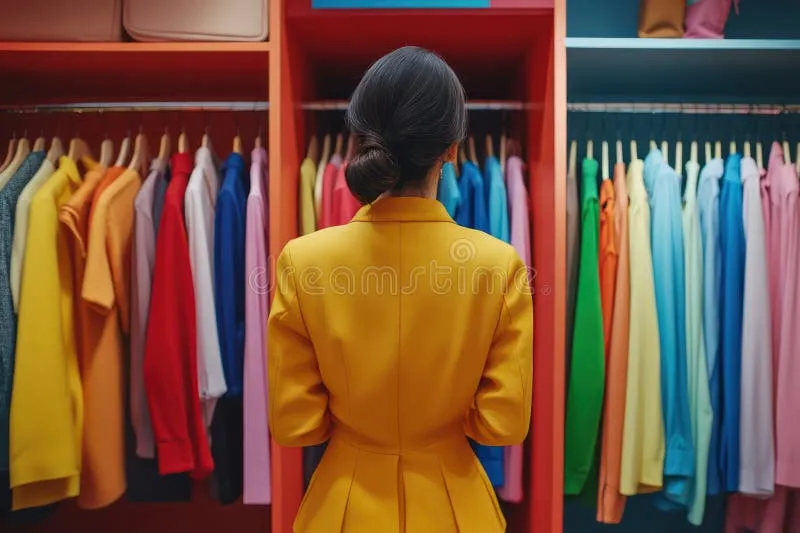
Photo: confident woman getting dressed in mirror morning routine natural light, via images.stockcake.com
Let me tell you about a blazer I bought three years ago. It was a deep rust-orange, structured, beautiful — the kind of piece that looks incredible on a hanger and even better on a mood board. I wore it twice. Both times I spent the entire day tugging at the hem, convinced I looked like I was playing dress-up in someone else's wardrobe. The blazer wasn't the problem. I was.
We talk a lot in the fashion world about power dressing — the idea that certain clothes carry a kind of transformative magic. Slip on a tailored suit and suddenly you're decisive. Wear red and people listen. There's a whole industry built around this premise, and honestly? It's not entirely wrong. But it's also not the whole story.
The Science (and the Myth) of Power Dressing
Researchers have actually studied the relationship between clothing and psychological state — a concept sometimes called enclothed cognition. The basic idea is that clothes carry symbolic meaning, and when we wear something associated with a particular trait (confidence, authority, creativity), we can internalize some of that meaning. It's real, and it's kind of fascinating.
But here's what those studies also show: the effect only works when you believe in the symbolism. A lab coat makes you more focused — if you think you're wearing a doctor's coat. The same coat, described as a painter's smock, doesn't produce the same result. The clothes aren't doing the heavy lifting. Your relationship to them is.
That changes everything about how we should be shopping, getting dressed, and building our wardrobes.
Fit Is the Real Power Move
Ask any stylist what the single biggest upgrade most women can make to their everyday look, and nine times out of ten, the answer is the same: fit. Not trend. Not color. Not a specific silhouette that's having a moment on Instagram. Just clothes that actually fit your body, right now, as it is today.
This sounds simple. It is not simple. Most of us are carrying around a closet full of aspirational sizing, pieces we love in theory but that gap at the waist or pull across the shoulders in ways we've learned to ignore. We wear them anyway, and then we wonder why we don't feel great.
My friend Jasmine, a marketing director in Atlanta, told me she spent years convinced she just wasn't a "dress person." Then she got one dress tailored — a $40 find from a thrift store that cost another $25 to alter — and wore it to a work presentation. "I didn't fidget once," she said. "I just... talked. I wasn't thinking about what I was wearing at all." That's the goal. Not to think about what you're wearing. To be so comfortable in it that it disappears.
The Emotional Inventory
Here's a practical exercise that sounds a little woo-woo but is genuinely useful: the next time you get dressed and feel good — not just put-together, but actually good — stop and pay attention. What specifically is working? Is it the weight of the fabric? The way the color makes your skin look? The fact that nothing is too tight anywhere? Write it down.
Do the same thing on the days you feel off. Not "this outfit isn't cute" — go deeper. Are you uncomfortable physically? Does the piece feel like a costume? Does it belong to an older version of you that you're not really sure you still are?
Over time, patterns emerge. Most women who do this realize their confidence closet is actually pretty small — maybe eight to twelve pieces that consistently make them feel like themselves. Everything else is noise.
Tara, a nurse practitioner in Chicago, did this exercise and discovered that almost everything she felt good in had one thing in common: pockets. "It sounds ridiculous," she laughed. "But when I have somewhere to put my hands, I feel grounded. I feel ready." She's since rebuilt a significant chunk of her wardrobe around that one insight.
Trends Are a Suggestion, Not a Requirement
The fashion calendar is relentless. There's always something new, something you're supposed to want, some silhouette that's allegedly replacing the one you just finally got comfortable in. And if you're someone who genuinely loves trends — who gets a real thrill from being early on something — that's wonderful. Lean into it.
But if you're wearing something primarily because it's supposed to be flattering right now, and you feel vaguely uncomfortable every time you catch your reflection? That's not style. That's homework.
Confidence doesn't come from wearing what's current. It comes from wearing what's yours. Those are related sometimes, and completely unrelated other times.
Getting Out of Your Own Way
The hardest part of all of this is that it requires a kind of honesty most of us weren't really taught to practice around our appearance. We're good at criticizing our bodies. We're good at wishing things were different. We're less practiced at simply noticing what actually works and doubling down on it without apology.
So here's the reframe: stop asking "does this look good?" and start asking "do I feel like me in this?" Those questions have very different answers, and only one of them is going to help you get dressed with any real ease.
The rust blazer, by the way? I finally gave it away last spring. Not because it wasn't beautiful — it was. But it was someone else's version of confident, not mine. Making space for that truth turned out to be its own kind of power move.